PostGIS 3.0.6dev-r@@SVN_REVISION@@
Loading...
Searching...
No Matches

◆ lw_dist2d_curvepoly_curvepoly()

int lw_dist2d_curvepoly_curvepoly ( LWCURVEPOLY poly1,
LWCURVEPOLY poly2,
DISTPTS dl 
)

Definition at line 1067 of file measures.c.

1068{
1069 const POINT2D *pt;
1070
1071 /*1 if we are looking for maxdistance, just check the outer rings.*/
1072 if (dl->mode == DIST_MAX)
1073 return lw_dist2d_recursive(poly1->rings[0], poly2->rings[0], dl);
1074
1075 /* 2 check if poly1 has first point outside poly2 and vice versa, if so, just check outer rings
1076 here it would be possible to handle the information about which one is inside which one and only search for the
1077 smaller ones in the bigger ones holes.*/
1078 pt = lw_curvering_getfirstpoint2d_cp(poly1->rings[0]);
1079 if (lwgeom_contains_point(poly2->rings[0], pt) == LW_OUTSIDE)
1080 {
1081 pt = lw_curvering_getfirstpoint2d_cp(poly2->rings[0]);
1082 if (lwgeom_contains_point(poly1->rings[0], pt) == LW_OUTSIDE)
1083 return lw_dist2d_recursive(poly1->rings[0], poly2->rings[0], dl);
1084 }
1085
1086 /*3 check if first point of poly2 is in a hole of poly1. If so check outer ring of poly2 against that hole
1087 * of poly1*/
1088 pt = lw_curvering_getfirstpoint2d_cp(poly2->rings[0]);
1089 for (uint32_t i = 1; i < poly1->nrings; i++)
1090 if (lwgeom_contains_point(poly1->rings[i], pt) != LW_OUTSIDE)
1091 return lw_dist2d_recursive(poly1->rings[i], poly2->rings[0], dl);
1092
1093 /*4 check if first point of poly1 is in a hole of poly2. If so check outer ring of poly1 against that hole
1094 * of poly2*/
1095 pt = lw_curvering_getfirstpoint2d_cp(poly1->rings[0]);
1096 for (uint32_t i = 1; i < poly2->nrings; i++)
1097 if (lwgeom_contains_point(poly2->rings[i], pt) != LW_OUTSIDE)
1098 return lw_dist2d_recursive(poly1->rings[0], poly2->rings[i], dl);
1099
1100 /*5 If we have come all the way here we know that the first point of one of them is inside the other ones
1101 * outer ring and not in holes so we check which one is inside.*/
1102 pt = lw_curvering_getfirstpoint2d_cp(poly1->rings[0]);
1103 if (lwgeom_contains_point(poly2->rings[0], pt) != LW_OUTSIDE)
1104 {
1105 dl->distance = 0.0;
1106 dl->p1.x = dl->p2.x = pt->x;
1107 dl->p1.y = dl->p2.y = pt->y;
1108 return LW_TRUE;
1109 }
1110
1111 pt = lw_curvering_getfirstpoint2d_cp(poly2->rings[0]);
1112 if (lwgeom_contains_point(poly1->rings[0], pt) != LW_OUTSIDE)
1113 {
1114 dl->distance = 0.0;
1115 dl->p1.x = dl->p2.x = pt->x;
1116 dl->p1.y = dl->p2.y = pt->y;
1117 return LW_TRUE;
1118 }
1119
1120 lwerror("Unspecified error in function lw_dist2d_curvepoly_curvepoly");
1121 return LW_FALSE;
1122}
#define LW_FALSE
Definition liblwgeom.h:108
#define LW_TRUE
Return types for functions with status returns.
Definition liblwgeom.h:107
#define LW_OUTSIDE
int lwgeom_contains_point(const LWGEOM *geom, const POINT2D *pt)
Definition lwcompound.c:129
void lwerror(const char *fmt,...)
Write a notice out to the error handler.
Definition lwutil.c:190
int lw_dist2d_recursive(const LWGEOM *lwg1, const LWGEOM *lwg2, DISTPTS *dl)
This is a recursive function delivering every possible combination of subgeometries.
Definition measures.c:284
static const POINT2D * lw_curvering_getfirstpoint2d_cp(LWGEOM *geom)
Definition measures.c:886
#define DIST_MAX
Definition measures.h:43
POINT2D p1
Definition measures.h:52
POINT2D p2
Definition measures.h:53
int mode
Definition measures.h:54
double distance
Definition measures.h:51
LWGEOM ** rings
Definition liblwgeom.h:589
uint32_t nrings
Definition liblwgeom.h:594
double y
Definition liblwgeom.h:376
double x
Definition liblwgeom.h:376

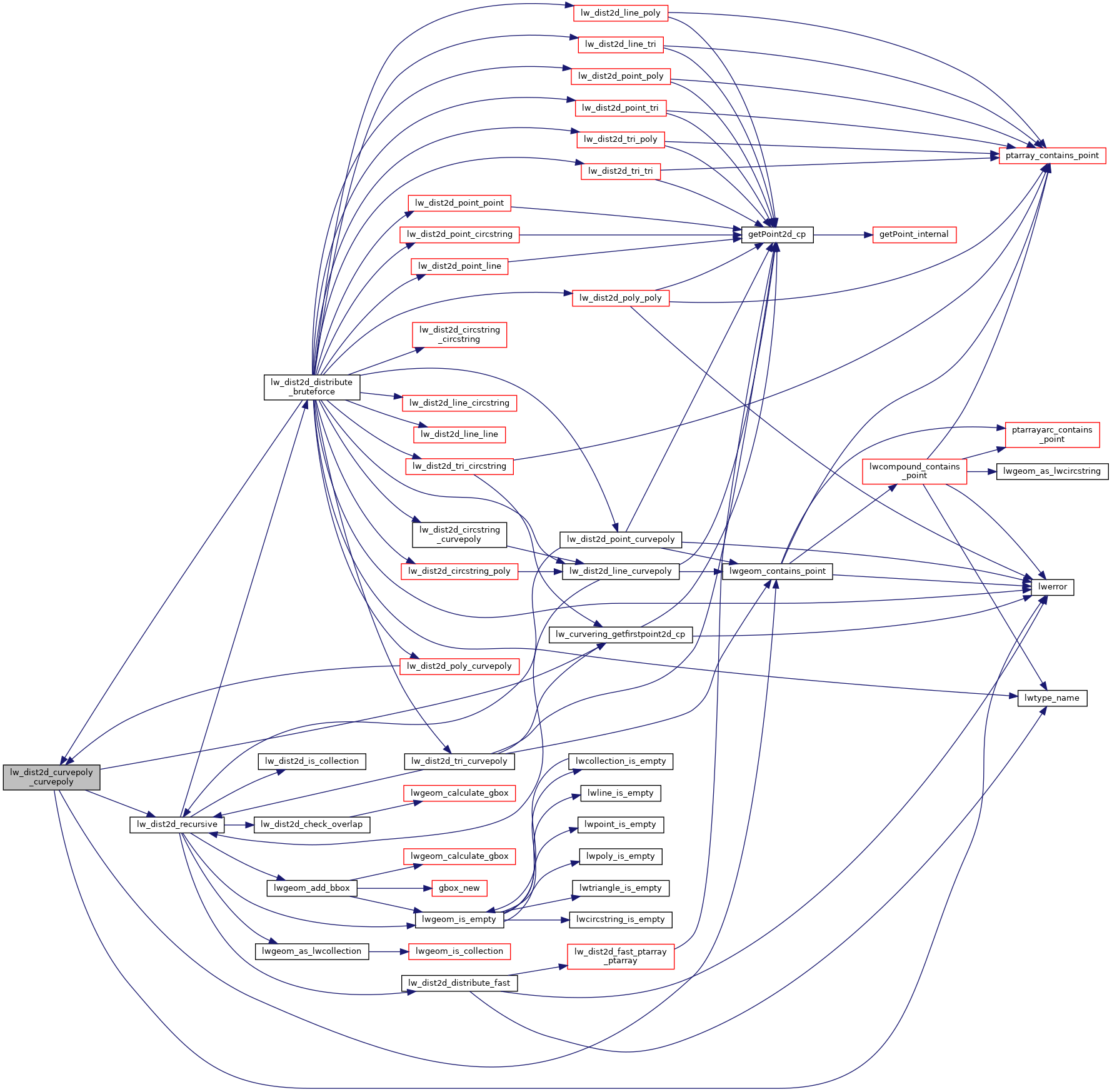
References DIST_MAX, DISTPTS::distance, lw_curvering_getfirstpoint2d_cp(), lw_dist2d_recursive(), LW_FALSE, LW_OUTSIDE, LW_TRUE, lwerror(), lwgeom_contains_point(), DISTPTS::mode, LWCURVEPOLY::nrings, DISTPTS::p1, DISTPTS::p2, LWCURVEPOLY::rings, POINT2D::x, and POINT2D::y.

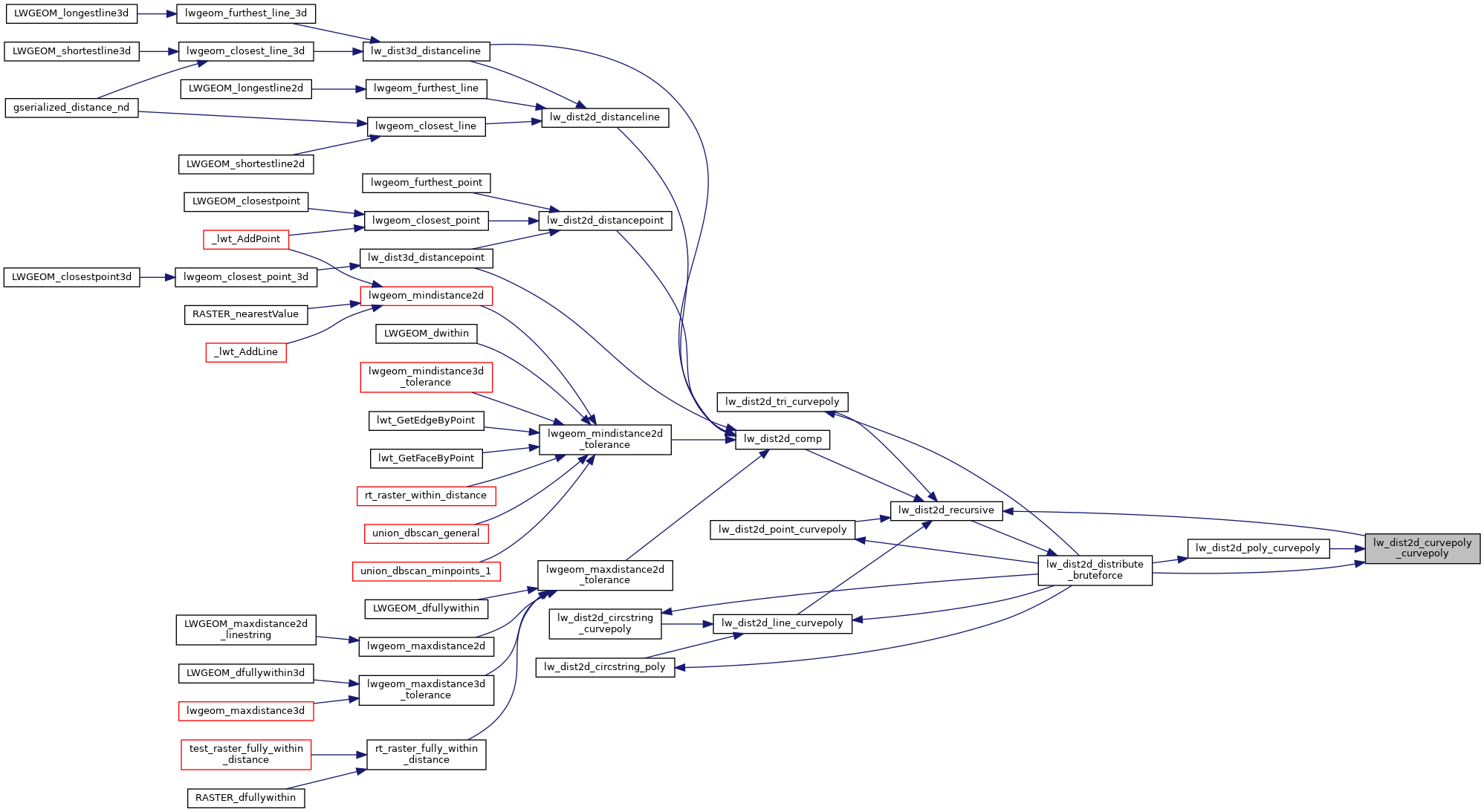
Referenced by lw_dist2d_distribute_bruteforce(), and lw_dist2d_poly_curvepoly().

Here is the call graph for this function:
Here is the caller graph for this function: