Loading...
Searching...
No Matches
◆ GEOSnoop()
| Datum GEOSnoop | ( | PG_FUNCTION_ARGS | ) |
Definition at line 2815 of file postgis/lwgeom_geos.c.
2816{
2817 GSERIALIZED *geom;
2818 GEOSGeometry *geosgeom;
2819 GSERIALIZED *lwgeom_result;
2820
2821 initGEOS(lwpgnotice, lwgeom_geos_error);
2822
2823 geom = PG_GETARG_GSERIALIZED_P(0);
2824 geosgeom = POSTGIS2GEOS(geom);
2825 if ( ! geosgeom ) PG_RETURN_NULL();
2826
2828 GEOSGeom_destroy(geosgeom);
2829
2830 PG_FREE_IF_COPY(geom, 0);
2831
2832 PG_RETURN_POINTER(lwgeom_result);
2833}
int gserialized_has_z(const GSERIALIZED *g)
Check if a GSERIALIZED has a Z ordinate.
Definition gserialized.c:174
GSERIALIZED * GEOS2POSTGIS(GEOSGeom geom, char want3d)
Definition postgis/lwgeom_geos.c:2660
Definition liblwgeom.h:429
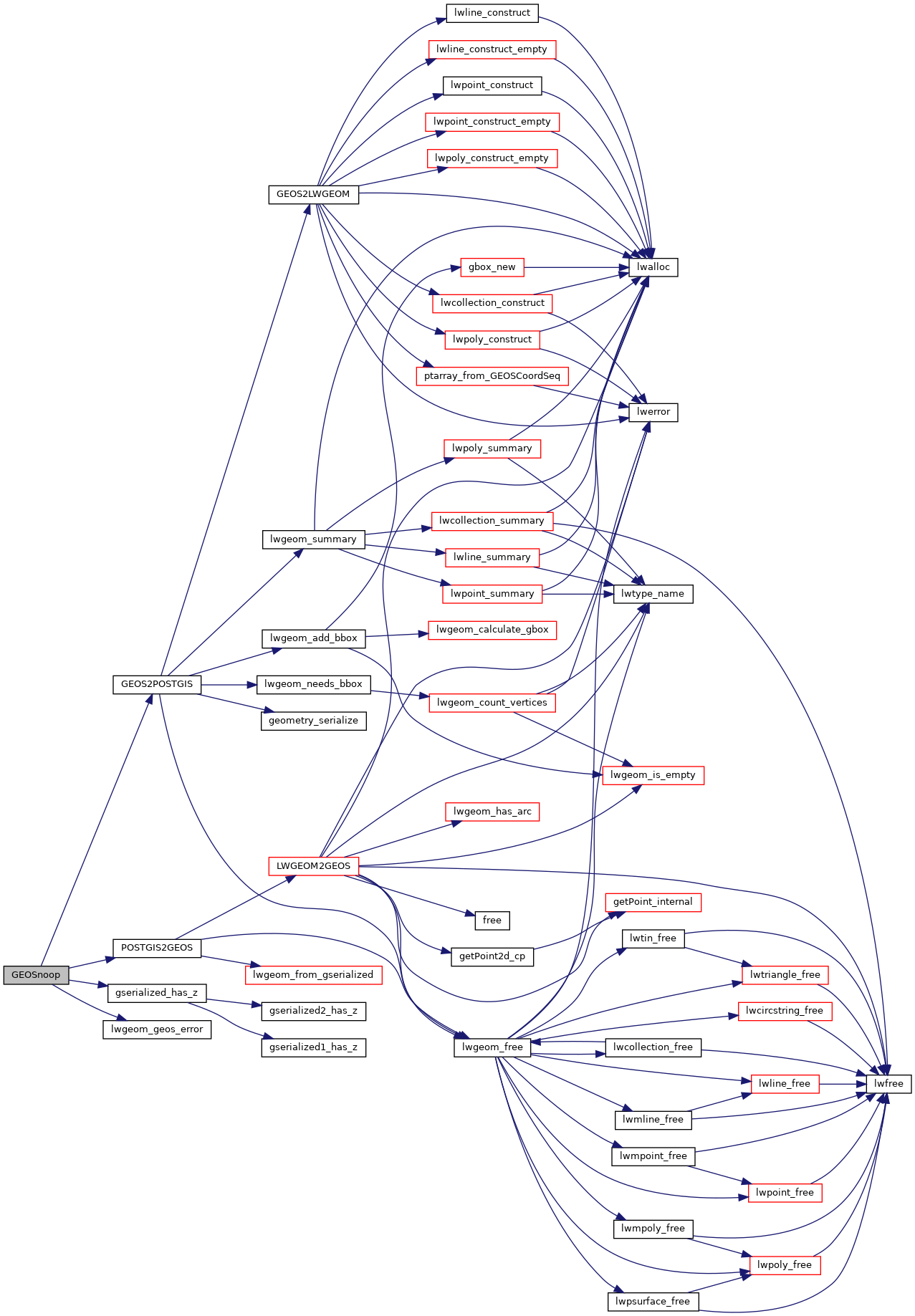
References GEOS2POSTGIS(), gserialized_has_z(), lwgeom_geos_error(), and POSTGIS2GEOS().
Here is the call graph for this function: